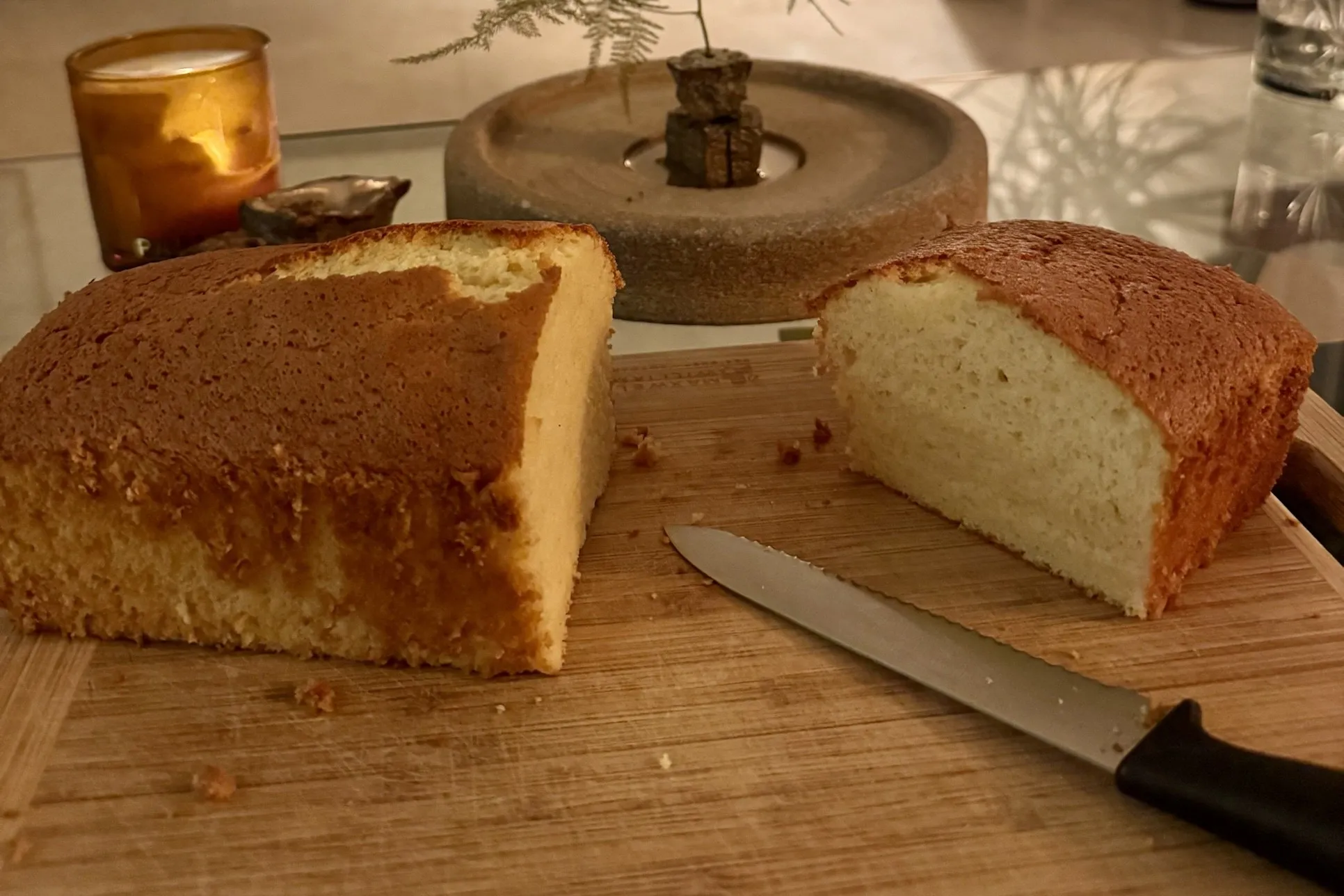
Orange Chiffon Cake
- Makes
- A cake in a 30x10 cm loaf pan
- Active time
- About 30 minutes
- Total time
- About 2.5 hours
- Level
- Medium
Ingredients
Yolk batter
- 63 g (about 3½) Egg yolks
- 61 g Sugar
- 6 g Orange zest, from 2 oranges
- 74 g Canola oil
- 122 g Orange juice
- 3.5 g Vanilla extract
- 156 g Cake flour, or 139 g all-purpose flour + 17 g cornstarch
- 6 g Baking powder
- 1.7 g Salt
Meringue
- 144 g (about 5) Egg whites, at room temperature
- 91 g Sugar
Glaze
- 60 g Powdered sugar, optional
- 13 g Orange juice
Method
Step 1 of 4Yolk batter
- 63 g (about 3½) Egg yolks
- 61 g Sugar
- 6 g Orange zest, from 2 oranges
- 74 g Canola oil
- 122 g Orange juice
- 3.5 g Vanilla extract
- 156 g Cake flour, or 139 g all-purpose flour + 17 g cornstarch
- 6 g Baking powder
- 1.7 g Salt
Making a chiffon cake for the first time?
- A pan with no grease at all. Don’t grease the sides: the batter clings to them to climb in the oven and not sink as it cools.
- Whip the whites until the tips bend, not dry. Dry whites don’t fold in well and leave white pockets in the cake.
- Fold gently, a third first to lighten, then the rest, just until the white streaks disappear. All the air in the cake comes from the whites.
- Don’t open the oven during the first part of baking, and the cake doesn’t come out until it’s fully baked.
- Cool it upside down, as soon as it comes out: the cake hangs in the pan and doesn’t collapse under its own weight. Unmold only when it’s completely cold.
- Heat the oven to 170°C, top and bottom heat, no fan.
- Wash the pan with hot soapy water to remove any trace of grease, and dry it well. Line only the base with parchment paper, and don't grease the sides.
- Rub the zest into the 61 grams of sugar with your fingers, until the sugar is moist and fragrant.
- Mix the zesty sugar with the egg yolks, then add the oil, juice and vanilla.
- Sift in the flour, baking powder and salt, and mix just until the batter is smooth.
Step 2 of 4Meringue
- 144 g (about 5) Egg whites, at room temperature
- 91 g Sugar
Whipping egg whites for the first time?
- A completely clean bowl and whisk, without a drop of fat. Even a little yolk in the whites, and they won’t whip.
- Room-temperature whites whip faster and to a bigger volume.
- Medium speed, not maximum. Foam built slowly is more stable, with small, even bubbles.
- Know your peaks: a soft peak flops over when you lift the whisk, a stiff peak stands up. Overwhipped whites look grainy and dry, and can’t be saved.
- Fold, don’t stir, as soon as the foam is ready: with a spatula or whisk, in wide strokes from the bottom, so you don’t break the bubbles.
- Whip the egg whites to soft peaks.
- Add the 91 grams of sugar gradually and keep whipping until the meringue is glossy and firm and its tip bends slightly. Don't whip until dry.
- Stir a third of the meringue into the batter to loosen it, then fold in the rest in two additions, with wide strokes, just until the white streaks disappear.
Step 3 of 4Baking and cooling
- Pour the batter into the pan and bake for 40-50 minutes.
- Don't open the oven during the first 30 minutes. After that, turn the pan halfway around.
- Take it out when the center of the cake reaches 96-98°C.
- As soon as it comes out of the oven, drop the pan onto the counter 2-3 times from a height of 15-30 cm.
- If the sides are attached all the way along: turn the pan upside down onto two low supports, with a towel or parchment paper underneath, and cool for at least an hour, until the cake is completely cold.
- If one side has come away, or the pan is nonstick: cool with the pan standing upright on a rack.
- When the cake is completely cold, run a thin knife along the sides and turn it out onto a plate.
Step 4 of 4Glaze
- 60 g Powdered sugar, optional
- 13 g Orange juice
- If you'd like a glaze, mix the powdered sugar with the orange juice until smooth, and spread it over the cooled cake.
Comments
No comments yet. Made it? Tell us how it went!